In September of 1888, Vincent van Gogh sat down in Arles and wrote to Paul Gauguin, then painting in Brittany with Émile Bernard. “I would so much like to have here Gauguin’s portrait of Bernard,” he told Theo, describing the letter he’d just sent, “and Bernard’s of Gauguin.” He wanted the two men to paint each other, then send the results south to Arles, where Van Gogh was trying to build something he called an artist colony — a shared house, shared meals, shared purpose — out of a rented yellow building and a persistence none of his friends quite matched.
He’d gotten the idea, in part, from Japanese printmakers, who he understood to have traded work with each other as a way of building solidarity across a scene. It was a generous, faintly formal proposal, the kind of thing you write when you badly want something to work: a portrait exchange, conducted by mail, between three men who had spent, in total, a few weeks in one another’s company.
A solution, arrived at sideways
Bernard was twenty. Gauguin was forty and already something of a legend in his own circle — Bernard’s letters about him were, by Van Gogh’s own report to Theo, full of a veneration bordering on fear. Asked to paint Gauguin directly, Bernard said he couldn’t. Van Gogh, hearing this, pushed back — he wrote that it was nonsense, that here were two portraitists who’d lived side by side for months and were apparently going to part ways without ever having painted one another.
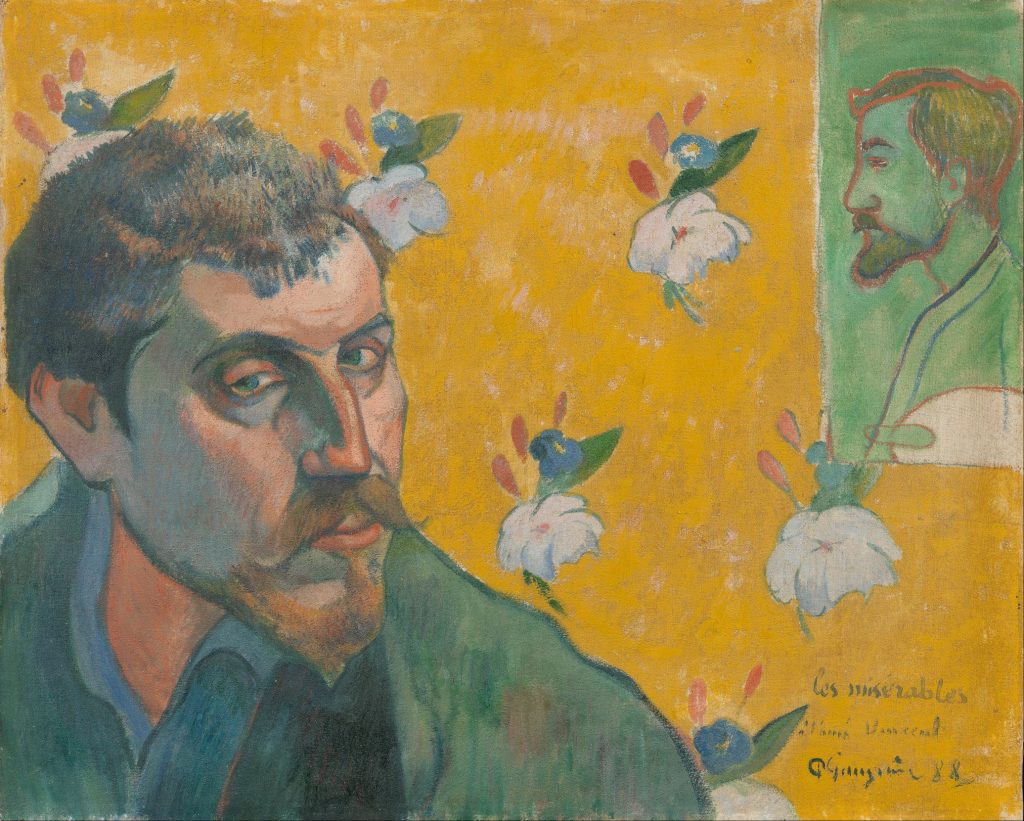
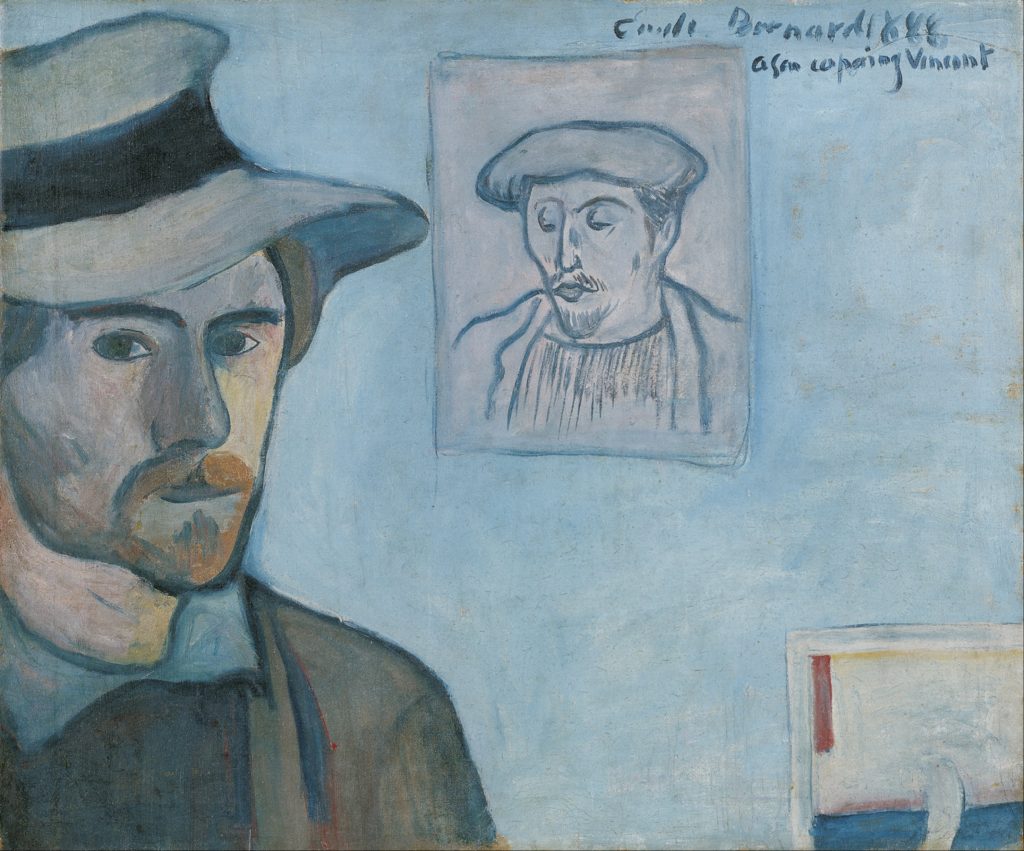
Bernard and Gauguin found a way around it. Instead of portraits of each other, each painted a self-portrait, with a small sketch of the other worked into the background — Gauguin appearing in miniature inside Bernard’s canvas, Bernard appearing in miniature inside Gauguin’s. Gauguin announced the solution himself, in the letter that accompanied the paintings: they’d satisfied Van Gogh’s request, he wrote, “in a different way” — but the result amounted to the same thing he’d asked for. Two portraits, each one carrying the other man inside it.
What arrived
“How glad I am for Gauguin,” Van Gogh wrote to Theo the moment both paintings reached him. “I shall not try to find words to tell you — let’s be of good heart.” Whatever he’d expected, the two canvases had landed exactly the way he’d hoped they would.
Gauguin had cast himself as Jean Valjean, the wrongly persecuted hero of Victor Hugo’s Les Misérables — not a likeness so much as a thesis. By giving the outcast his own features, Gauguin explained in the letter that came with it, he’d made a portrait not just of himself but of every misunderstood artist like the two of them: “poor victims of society, taking our revenge on it by doing good.” It’s a fairly large idea to fold into a friendship gift, and Van Gogh took it seriously enough that, before he’d even seen the canvas, he offered to buy it outright — worried his own contribution wouldn’t measure up to something this considered. Gauguin refused. The portrait, he told Theo, wasn’t for sale. He’d made it for Vincent. Exchanged or not.
“The Gauguin is of course remarkable,” Van Gogh told Theo once he’d actually seen it, “but I very much like Bernard’s picture.” Bernard’s, made of a few abrupt tones and dark lines, struck him as having the distinction of “a real, real Manet.” Tucked into its lower corner is a scrap of Japanese print, almost certainly one Van Gogh himself had given Bernard back in Paris — a private reference folding the whole original inspiration for the exchange back into the painting.
Gauguin’s portrait moved him differently. He described it to Theo as more studied, more deliberate — carried further than his own, with “not a shadow of gaiety” in it anywhere. Gauguin looked tormented in it, he thought, and he found himself hoping the mood wouldn’t last. Admiration and worry, in the same letter, about the same painting.
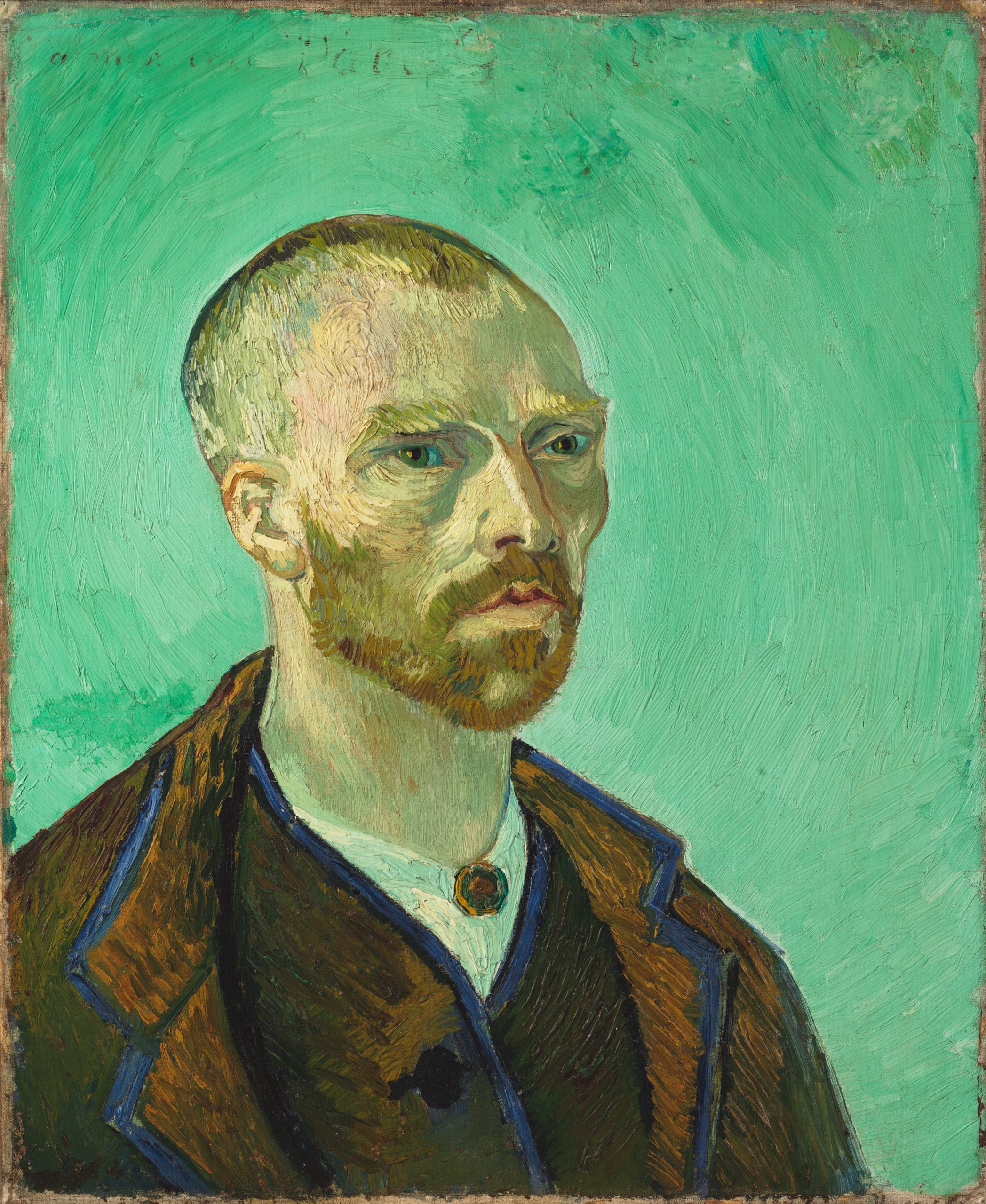
Then Van Gogh painted his own reply: shaved head, features deliberately slanted “in the Japanese manner,” aiming, in his own words, for “the character of a bonze, a simple worshiper of the eternal Buddha.” Set beside Gauguin’s, he told Theo, his version was just as grave — but less despairing. He sent it off to Gauguin with real excitement. “How happy old Gauguin will be,” he wrote.
Bernard got something else — a riverscape of men unloading sand barges on the Rhône — though not because he’d been shortchanged. He’d already gotten a Van Gogh self-portrait months earlier in Paris, traded straight across for a portrait Bernard had painted of his own grandmother. Van Gogh simply had no other self-portrait on hand to give him.
.jpg)


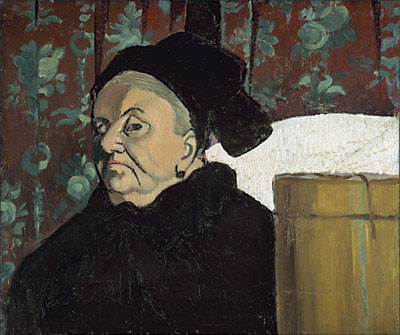
Touched by both paintings, and a little worried about Gauguin in particular, Van Gogh decided he’d been handed a new job. He told Theo he felt a duty had landed on him: to make his own work sellable enough to support the group. He reached for a comparison to the painter Narcisse Diaz, who’d sold well enough in his own lifetime to bail out his poorer friend Millet, and quietly cast himself in the Diaz role. Two friendship portraits arrive in the mail, and within the same letter, Van Gogh has appointed himself group treasurer.
The inscriptions
All three men wrote directly on the canvases.
Bernard signed his over to “mon copaing Vincent” — copain, meaning friend or pal, spelled with an extra, entirely unnecessary g, jokingly mimicking the Provençal accent Van Gogh had picked up in Arles. The Van Gogh Museum’s own technical analysis confirms the dedication was painted wet-in-wet, alongside the rest of the canvas — there from the very first strokes.
Gauguin’s inscription is the fullest of the three: Les misérables, then à l’ami Vincent, then his signature and the year — P. Gauguin 88. Unlike his usual titles, which tended toward the deliberately vague, this one came with a full explanation in letters to both Van Gogh and a mutual friend, laying out exactly what the Valjean framing was meant to say. Gauguin rarely bothered explaining a painting. This one, he wanted understood correctly.
Van Gogh’s own inscription was the plainest of the three: “à mon ami Paul Gauguin.” To my friend Paul Gauguin.
Six months later
Back in October, waiting to see Gauguin’s self-portrait for the first time, Van Gogh had told Theo he was curious to compare it, eventually, against whatever Gauguin painted of himself six months on — to see if the tormented man in the first portrait had recovered.
He got his answer sooner than planned, and from an unexpected picture. By January, Gauguin had made a second self-portrait during his final days in Arles. Van Gogh set it beside the one Gauguin had mailed him from Brittany and told Theo what he saw: on the whole, his friend looked calmer now. More settled. A version of himself with some of the strain worked out of it.
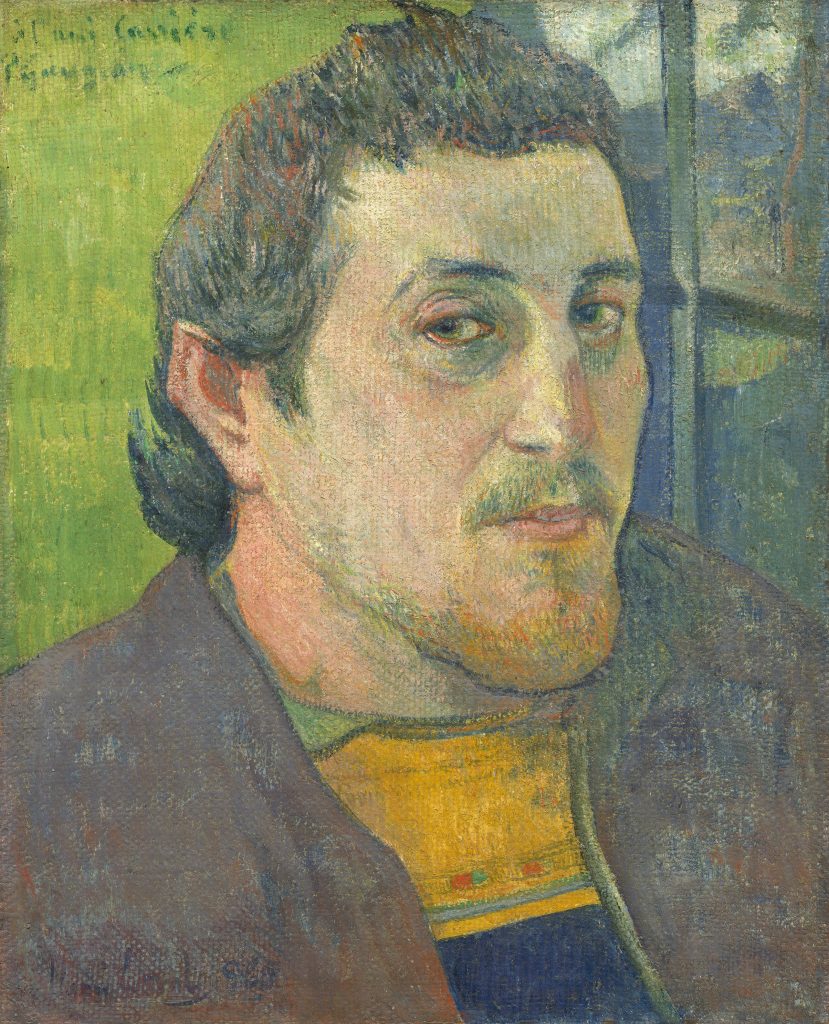
Van Gogh had always treated a self-portrait as an honest report on the state of the person who made it — that was the whole premise behind asking for one in the first place. Months later, and after everything that had happened between the two men by then, he was still reading them that way. And for once, the report had improved.
Nine years later
Van Gogh died in 1890, two years after the exchange. Gauguin outlived him by more than a decade, and in 1897, needing money for a trip to Tahiti, he sold a number of things to raise it — among them, the self-portrait Van Gogh had once inscribed to him by hand. It went to a Parisian art dealer for three hundred francs.
At some point before the sale, the dedication was scraped off the canvas. A 1984 technical investigation at Harvard, where the painting eventually landed, weighed a handful of suspects — Bernard, ruled out for lack of access; Van Gogh himself, raised and set aside. The most likely candidate, the study concluded, was Gauguin: erasing the word “friend” from a painting he was about to sell.
What Do You Think?
Would you have kept the dedication, or erased the receipt? Share your thoughts in the comments.